
 ES
ES








Why Do My Cold Sores Keep Returning?
Understanding Recurring Cold Sores and Triggers
You notice a familiar tingling on your lip. At first, there's barely anything there. But you've felt this before.
Within hours or a day, the area may become uncomfortable, and you're already wondering:
Why does this cold sore keep coming back?
Cold sores are small blisters that typically develop on or around the lips. They are most commonly associated with the herpes simplex virus type 1 (HSV-1).
After the initial infection, the virus remains in the body and can become active again later. That's why someone may experience another cold sore months—or even years—after the previous outbreak disappeared.
A recurrence may sometimes follow:
- Illness
- Fever
- Stress
- Fatigue
- Sun exposure
- Changes affecting the immune system
- Irritation or injury around the lips
- Hormonal changes
Sometimes, however, there isn't an obvious trigger.
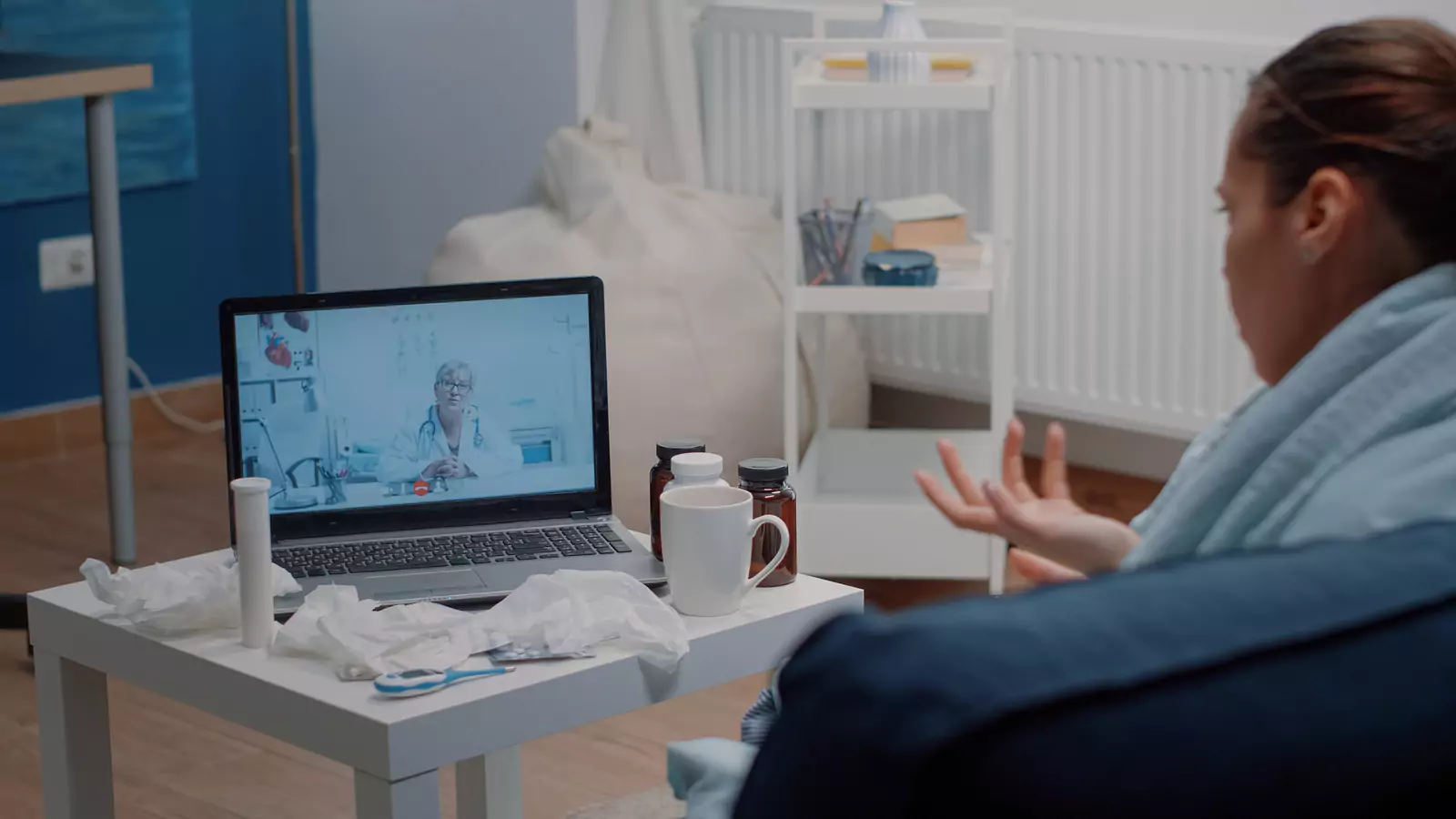
VirtualCare2Go specifically includes cold sores among the conditions it treats. For appropriate non-emergency symptoms, a licensed provider can evaluate what you're experiencing and determine whether treatment may be appropriate.
What Does a Cold Sore Feel Like at First?
A cold sore doesn't always begin with a visible blister.
Some people first notice what is sometimes called a prodrome, or an early warning stage.
You may experience:
- Tingling
- Burning
- Itching
- Tenderness
- Mild discomfort
This may occur in the same area where previous cold sores have appeared.
Afterward, small fluid-filled blisters may develop.
Recognizing your usual early symptoms can be useful because some antiviral treatments are most effective when started early.
What Does a Cold Sore Look Like?
Cold sores often appear as one or more small blisters around the lips.
Over time, the area may:
- Become red or irritated
- Develop fluid-filled blisters
- Break open
- Become crusted
- Gradually heal
Appearance can change considerably during the healing process.
Not every bump, blister, or sore around the mouth is a cold sore, though.
If something looks significantly different from your usual outbreaks, a healthcare provider can help evaluate it.
Why Did My Cold Sore Come Back?
Once someone has HSV, the virus can remain inactive in nerve cells and later reactivate.
That means a recurrence isn't necessarily a new infection.
For some people, outbreaks seem connected with recognizable triggers.
For others, they appear without an obvious reason.
Keeping track of what happened before each outbreak may help reveal a pattern.
Can Stress Trigger Cold Sores?
Stress is commonly reported as a trigger for recurrent cold sores.
You might notice outbreaks during periods involving:
- Major deadlines
- Travel
- Family stress
- Exams
- Poor sleep
- Busy work schedules
This doesn't mean stress is the only possible trigger.
But if cold sores repeatedly appear during particularly stressful periods, that pattern may be worth discussing with your healthcare provider.
Can Being Sick Trigger One?
Illness may sometimes be associated with cold sore recurrence.
You might notice an outbreak while experiencing or recovering from:
- A cold
- Flu-like illness
- Fever
- Another infection
Historically, this association with fever is one reason cold sores have also been called fever blisters.
If you're experiencing additional symptoms, mention them during your virtual appointment rather than focusing only on the lip lesion.
Can Sun Exposure Trigger Cold Sores?
For some people, significant sunlight exposure appears to be associated with outbreaks.
Maybe you've noticed a cold sore after:
- A beach day
- A long outdoor event
- Vacation
- Yard work
- Spending hours outside
If sunlight repeatedly seems connected with your outbreaks, discuss prevention strategies with your healthcare provider.
Can Lack of Sleep Trigger an Outbreak?
Fatigue and disruptions in routine may accompany other cold sore triggers, such as stress or illness.
If your outbreaks frequently appear after several nights of poor sleep, include that information when you're looking for patterns.
Sleep alone doesn't explain every recurrence, but it can be one piece of the overall picture.
Why Do I Always Get Them in the Same Spot?
Cold sores often recur around similar areas of the lips or face because HSV remains associated with particular nerve pathways after the initial infection.
So if you repeatedly notice tingling in the same area before an outbreak, that isn't unusual.
A lesion appearing in a completely different location or looking substantially different may deserve additional evaluation.
Are Cold Sores Contagious?
Yes.
HSV can spread through close contact.
Transmission risk can be particularly important when an active cold sore is present.
During an outbreak, avoid:
- Kissing
- Sharing lip products
- Sharing eating utensils when contaminated with saliva
- Sharing drinks
- Touching the sore and then touching another person
Good hand hygiene is important, especially after touching your face.
Can I Spread a Cold Sore Before the Blister Appears?
HSV transmission can sometimes occur even when a visible sore isn't present.
However, active symptoms such as tingling, blistering, or an open sore can be particularly important times to take precautions.
If you recognize the early warning signs of an outbreak, begin being careful about close contact rather than waiting until the blister becomes obvious.
Can I Spread It to Another Part of My Body?
Potentially.
Touching an active sore and then touching another area may transfer the virus.
The eyes are particularly important to protect.
After touching or applying medication to a cold sore:
Wash your hands thoroughly before touching your eyes or another person's skin.
Avoid picking at the lesion.
What If I Accidentally Touch My Cold Sore?
Don't panic.
Wash your hands thoroughly with soap and water.
Then avoid touching:
- Your eyes
- Contact lenses
- Other areas of damaged skin
- Another person's face
Frequent handwashing during an active outbreak can reduce unnecessary spread.
Should I Pop a Cold Sore?
No.
Popping or picking at the blister doesn't make the virus disappear faster.
Instead, it may:
- Irritate the area
- Cause bleeding
- Delay healing
- Increase the chance of bacterial contamination
- Spread fluid from the lesion
Let the area heal without intentionally breaking the blister.
Should I Peel Off the Crust?
Try not to.
As a cold sore heals, it may crust or scab.
Picking at that area can reopen the skin and cause:
- Bleeding
- Pain
- Irritation
- Delayed healing
If the area feels dry or uncomfortable, ask your healthcare provider what products may be appropriate.
Can I Put Makeup Over a Cold Sore?
Be cautious.
Products that directly contact an active lesion may become contaminated.
That includes:
- Lipstick
- Lip gloss
- Lip liner
- Makeup applicators
Repeatedly covering and touching the lesion can also irritate it.
If you use a product directly on an active cold sore, consider whether it should be replaced afterward.
Should I Share Lip Balm?
No.
Avoid sharing lip balm or other products that directly touch the lips.
This is especially important when you have an active cold sore.
Even outside an outbreak, sharing personal lip products generally isn't a great hygiene practice.
Can I Kiss Someone With a Cold Sore?
Avoid kissing while you have an active cold sore or early symptoms suggesting one is developing.
This includes the tingling or burning stage before the blister is fully visible.
Cold sores can spread through close contact with the affected area.
What About Babies?
This is especially important.
HSV infection can be dangerous for newborns.
Do not kiss a newborn when you have an active cold sore or symptoms suggesting an outbreak is beginning.
Wash your hands carefully before handling the baby, and follow medical guidance if you're a parent or caregiver with an active outbreak.
If a newborn may have been exposed or develops concerning symptoms, contact the child's healthcare provider promptly.
Can Cold Sores Spread Through Oral Sex?
Yes.
HSV around the mouth can potentially spread to the genital area through oral sexual contact.
Avoid oral sexual contact during an active oral outbreak or when you notice early symptoms suggesting one is developing.
A healthcare provider can answer questions about HSV transmission and prevention without judgment.
Is a Cold Sore the Same as a Canker Sore?
No.
People often use the terms interchangeably, but they aren't the same condition.
Cold sores usually develop around the lips and are associated with HSV.
Canker sores generally develop inside the mouth and are not caused by HSV.
A sore inside your cheek or on the inner lip isn't automatically a cold sore.
Location is one clue your provider may use when evaluating the lesion.
Is It a Cold Sore or a Pimple?
A bump near the lip can sometimes be difficult to identify.
Pimples may occur around hair follicles or clogged pores, while cold sores often develop as grouped blisters and may begin with tingling or burning.
But appearance can overlap.
Avoid squeezing an uncertain lesion.
If you aren't sure what it is, a virtual evaluation may help.
Could It Be Something Else?
Yes.
Not every sore around the mouth is HSV.
Other possibilities may include:
- Acne
- Skin irritation
- Cracked skin
- Other infections
- Allergic or contact reactions
- Other types of sores
If the lesion looks different from previous cold sores, tell your provider.
Clear photographs can be especially helpful.
How Long Does a Cold Sore Last?
Cold sores typically progress through stages and eventually heal.
The exact duration varies.
Contact a healthcare provider if a sore:
- Isn't healing as expected
- Is becoming significantly worse
- Is unusually large
- Is extremely painful
- Keeps returning very frequently
A persistent lesion deserves reassessment rather than being automatically assumed to be another routine cold sore.
Can Cold Sores Be Treated?
Yes.
Antiviral medications may be appropriate for some patients.
Depending on the situation, treatment may include:
- Oral antiviral medication
- Topical treatment
- Supportive care
The best option depends on factors such as:
- When symptoms began
- Severity
- Frequency of outbreaks
- Medical history
- Other medications
A licensed provider can determine whether prescription treatment is appropriate.
Why Does Starting Treatment Early Matter?
Antiviral treatment can be most useful when started early in the course of an outbreak.
That's why recognizing symptoms such as:
- Tingling
- Burning
- Itching
before the blister fully develops can be helpful.
If you experience recurrent cold sores and recognize your usual warning signs, don't necessarily wait several days before seeking medical guidance.
Can I Use Leftover Cold Sore Medicine?
Don't automatically use old prescription medication without confirming that it's still appropriate.
Consider:
- Expiration
- Dose
- Current medications
- Changes in your health
- Whether the lesion is actually a cold sore
Your provider can determine whether the same treatment is still appropriate for you.
Do Antibiotics Treat Cold Sores?
No.
Cold sores are caused by a virus, not bacteria.
Antibiotics don't treat HSV.
If a cold sore becomes secondarily infected with bacteria, that's a separate issue that requires evaluation.
Don't take leftover antibiotics simply because the area looks red.
What If My Cold Sore Is Swollen?
Some swelling and inflammation may occur around a lesion.
However, seek medical evaluation if swelling becomes:
- Severe
- Rapidly worse
- Very painful
- Associated with spreading redness
- Associated with pus
- Accompanied by fever
Those changes may suggest another problem.
What If It Starts Draining Pus?
Cold sores contain fluid, but thick pus or increasing surrounding redness and pain may suggest a secondary bacterial infection.
Avoid squeezing the lesion.
Take a clear photo and contact a healthcare provider.
VirtualCare2Go also treats skin infections and redness, although more significant infections may require in-person evaluation.
What If I Have a Cold Sore Near My Eye?
This deserves extra caution.
HSV can affect the eye and potentially threaten vision.
Seek prompt medical evaluation for symptoms such as:
- Eye redness
- Eye pain
- Light sensitivity
- Blurred vision
- Significant watering
- A lesion very close to the eye accompanied by eye symptoms
Don't put cold sore medication into or near the eye unless specifically directed by an appropriate healthcare professional.
What If My Eye Becomes Red Too?
A red eye occurring with an HSV outbreak shouldn't automatically be assumed to be routine pink eye.
If you have an active cold sore plus:
- Eye pain
- Significant redness
- Light sensitivity
- Vision changes
seek prompt in-person eye evaluation.
Eye involvement can require specialized treatment.
Why Am I Getting Cold Sores So Often?
Some people experience only occasional outbreaks.
Others have recurrences more frequently.
If you're experiencing frequent cold sores, tell your provider:
- How often they occur
- How long they last
- Where they appear
- Whether you recognize triggers
- How severe they are
- Whether treatment has helped before
For some patients with frequent or significant recurrences, a provider may discuss preventive antiviral treatment.
Should I Keep a Trigger Diary?
It can be helpful.
Record what was happening shortly before an outbreak.
Possible details include:
- Illness
- Fever
- Stress
- Poor sleep
- Sun exposure
- Travel
- Menstrual cycle
- Lip injury or irritation
After several outbreaks, you may begin to notice a pattern.
Don't Blame Yourself for Every Outbreak
Sometimes you can identify a trigger.
Sometimes you can't.
A recurrence doesn't necessarily mean you did something wrong.
HSV can reactivate even when there isn't an obvious explanation.
The goal is to recognize symptoms early, reduce transmission, and seek treatment when appropriate.
When Can VirtualCare2Go Help?
Because cold sores are specifically included in VirtualCare2Go's treatment scope, telehealth can be a convenient option for many non-emergency outbreaks.
Consider scheduling a virtual visit if:
- You feel the familiar tingling of a cold sore beginning.
- A blister has appeared around your lip.
- Cold sores keep returning.
- You're unsure whether the lesion is actually a cold sore.
- You want to discuss antiviral treatment.
- Your previous treatment isn't helping.
- You want guidance about reducing transmission.
- You need help identifying possible triggers.
During your appointment, your provider may ask about:
- When symptoms began
- Tingling or burning
- Location
- Appearance
- Previous outbreaks
- Frequency
- Possible triggers
- Pain
- Drainage
- Fever
- Eye symptoms
- Current medications
- Medical history
Clear photos may help with the evaluation.
Based on your symptoms, your provider can determine whether prescription treatment or additional evaluation is appropriate.
When Might You Need In-Person Care?
An in-person evaluation may be appropriate when:
- The diagnosis is unclear.
- The lesion isn't healing.
- Symptoms are unusually severe.
- Significant bacterial infection is suspected.
- The sore is near the eye with eye symptoms.
- Additional testing is needed.
- Another condition is suspected.
Telehealth can help determine whether that next step is necessary.
When Should You Seek Prompt Medical Care?
Seek prompt medical evaluation if:
- You develop eye pain, redness, light sensitivity, or vision changes.
- The lesion is rapidly worsening.
- You develop significant facial swelling.
- Redness is spreading.
- The area becomes increasingly painful.
- Thick pus or unusual drainage develops.
- You have significant fever or feel seriously ill.
- A newborn may have been exposed and there are concerns.
- You have important immune-system concerns and develop significant symptoms.
Don't wait for severe symptoms if eye involvement is possible.
When Is It an Emergency?
Seek emergency medical attention for:
- Severe difficulty breathing
- Significant tongue or throat swelling
- Severe eye symptoms with sudden vision loss
- Loss of consciousness
- Severe confusion
- Other potentially life-threatening symptoms
Routine telehealth should never delay emergency care.
Frequently Asked Questions
Why do cold sores keep coming back?
After the initial HSV infection, the virus remains in the body and can reactivate later, causing another outbreak.
What can trigger a cold sore?
Possible triggers may include illness, fever, stress, fatigue, sun exposure, hormonal changes, and irritation around the lips.
Can I feel a cold sore before I see it?
Yes. Some people experience tingling, itching, burning, or tenderness before a visible blister appears.
Are cold sores contagious?
Yes. HSV can spread through close contact, particularly when active symptoms are present.
Should I pop a cold sore?
No. Popping or picking can irritate the lesion, delay healing, and potentially spread fluid from the sore.
Are cold sores and canker sores the same?
No. Cold sores are typically associated with HSV and commonly occur around the lips. Canker sores usually develop inside the mouth and aren't caused by HSV.
Do antibiotics treat cold sores?
No. Antibiotics don't treat HSV because cold sores are caused by a virus.
Can cold sores affect the eyes?
HSV can infect the eye. Eye pain, redness, significant light sensitivity, or vision changes with an HSV outbreak require prompt medical evaluation.
Does VirtualCare2Go treat cold sores?
Yes. Cold sores are specifically included among the conditions VirtualCare2Go treats.
Can VirtualCare2Go prescribe cold sore medication?
A licensed provider can evaluate your symptoms and determine whether antiviral or other treatment is medically appropriate.
Convenient Virtual Care Throughout Texas
When you get recurring cold sores, you may start recognizing the warning signs before anyone else can even see them.
That familiar tingling.
A little burning.
Tenderness in the exact same spot.
Instead of waiting for the blister to fully develop, pay attention to those early symptoms.
Also consider what happened beforehand.
Were you recently sick?
Under more stress than usual?
Sleeping poorly?
Spending a lot of time in the sun?
You may eventually recognize a pattern that helps you prepare for future outbreaks.
VirtualCare2Go provides virtual care for cold sores and many other common non-emergency conditions throughout Texas.
A licensed healthcare provider can review your symptoms and photos, discuss treatment options, and help determine whether additional evaluation is necessary.
Patients must be physically located in Texas during their appointment.
Schedule Your Virtual Visit
If you feel a cold sore beginning, have developed another outbreak, or keep experiencing recurring cold sores—and you aren't experiencing serious warning signs—consider scheduling a virtual evaluation with VirtualCare2Go. Book your virtual visit today: https://www.virtualcare2go.com/